The Hall of Translators
Honor the linguists, reformers, and scholars whose devotion, sacrifice, and literary genius rendered the scriptures into the languages of ordinary men and women.
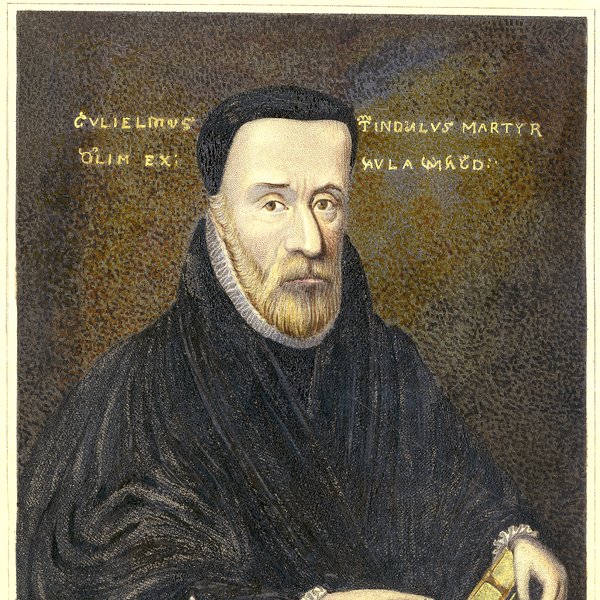
William Tyndale
Father of the English Bible & Protestant Reformer
1494 – 1536 • English
"If God spare my life, ere many years I will cause a boy that driveth the plough shall know more of the scripture than thou dost."
William Tyndale was an English biblical scholar and linguist who became a leading figure in the Protestant Reformation. Educated at Magdalen Hall, Oxford, and Cambridge, Tyndale became convinced that the English people urgently needed scripture in their native language directly translated from the original biblical tongues—Greek and Hebrew—rather than translated from Jerome's Latin Vulgate. Finding no patron in England due to Bishop Tunstall's opposition, Tyndale fled to the Continent in 1524. In 1526 in Worms, Germany, he published the first printed English New Testament. Over the subsequent decade, he translated the Pentateuch, Jonah, and historical books while constantly staying ahead of agents of King Henry VIII and Sir Thomas More. Tyndale's magnificent gift of phrase established the rhythm, cadence, and vocabulary of modern English.
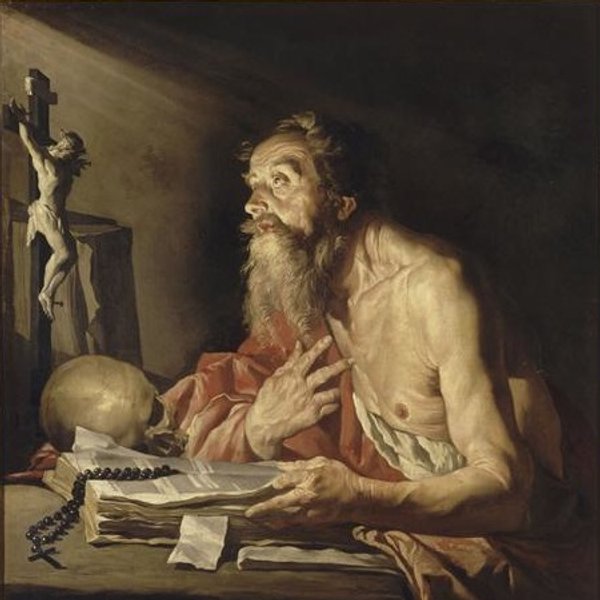
Saint Jerome (Eusebius Sophronius Hieronymus)
Doctor of the Church & Translator of the Vulgate
347 – 420 • Illyrian / Roman
"Ignorance of Scripture is ignorance of Christ."
Born in Stridon in Dalmatia, Jerome was one of the greatest linguistic scholars of the ancient world. Master of Latin, Greek, Hebrew, and Aramaic, he was commissioned in 382 AD by Pope Damasus I to produce an authoritative revision of the old Latin Bible. Jerome undertook the revolutionary decision to bypass the Greek Septuagint and translate the Old Testament directly from the Hebrew manuscripts preserved by Jewish communities. Working in a cave in Bethlehem, he laboured for over twenty years to complete what would become the Latin Vulgate, which shaped European Christianity and culture for over a millennium.
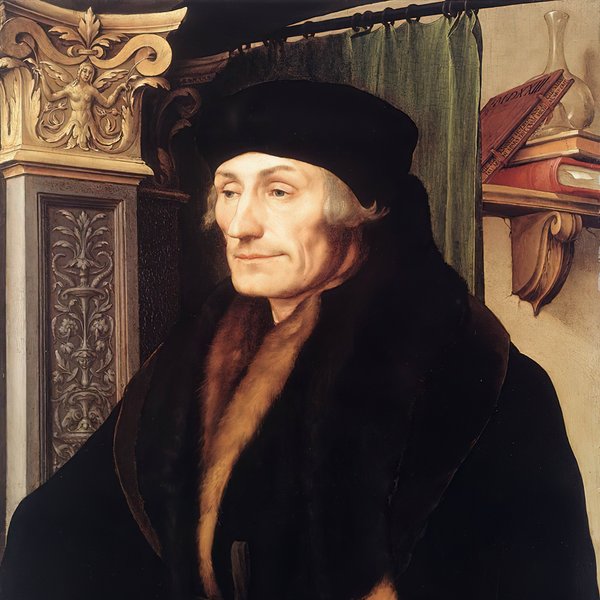
Desiderius Erasmus of Rotterdam
Prince of the Humanists & Renaissance Scholar
1466 – 1536 • Dutch
"I would that the farmer sing parts of the scriptures at the plow, that the weaver hum them to the tune of his shuttle, that the traveler beguile with their stories the weariness of his journey."
Desiderius Erasmus of Rotterdam was a Dutch philosopher and Christian humanist widely considered one of the greatest scholars of the northern Renaissance. Using humanist textual critique, Erasmus produced the first commercially published Greek New Testament, Novum Instrumentum omne, in Basel in 1516. His parallel Greek and Latin edition exposed numerous translation inaccuracies in the centuries-old Latin Vulgate (such as proving that Greek metanoite meant "repent" or "change your mind", not "do penance"). His Greek text established the foundation for the Textus Receptus, fueling vernacular translations across Reformation Europe.
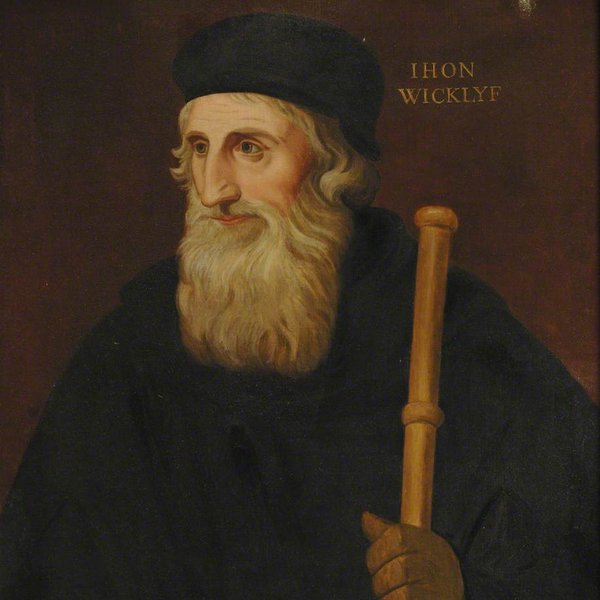
John Wycliffe
Morning Star of the Reformation
1328 – 1384 • English
"This Bible is for the government of the people, by the people, and for the people."
John Wycliffe was an Oxford philosopher, theologian, and priest whose reformist writings earned him the moniker "The Morning Star of the Reformation." Wycliffe argued that papal authority was subordinate to scripture and that all Christians had a divine right to read God's word in their vernacular tongue. Together with his circle of Oxford scholars, Wycliffe completed the first translation of the entire Bible into English in 1382. His followers, nicknamed Lollards, traveled the English countryside with handwritten copies, sowing the seeds of the English Reformation more than a century before Martin Luther.
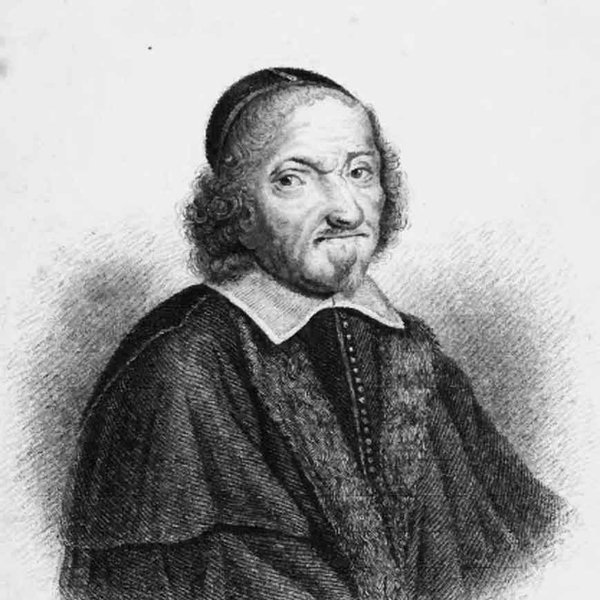
Myles Coverdale
Bishop of Exeter & Translator
1488 – 1569 • English
"Let not the reader be offended with diversity of translations, for it helpeth much to the understanding of the text."
Myles Coverdale was a graduate of Cambridge University and an Augustinian friar who became an ardent reformer. When William Tyndale was imprisoned, Coverdale completed the monumental task of printing the first entire English Bible in 1535. Coverdale was also commissioned by Thomas Cromwell to edit the Great Bible of 1539. A gifted stylist with a poet's ear, Coverdale’s rhythmic translation of the Psalms was incorporated into the 1662 Book of Common Prayer and remained the liturgical standard of the Anglican Church for over four centuries.
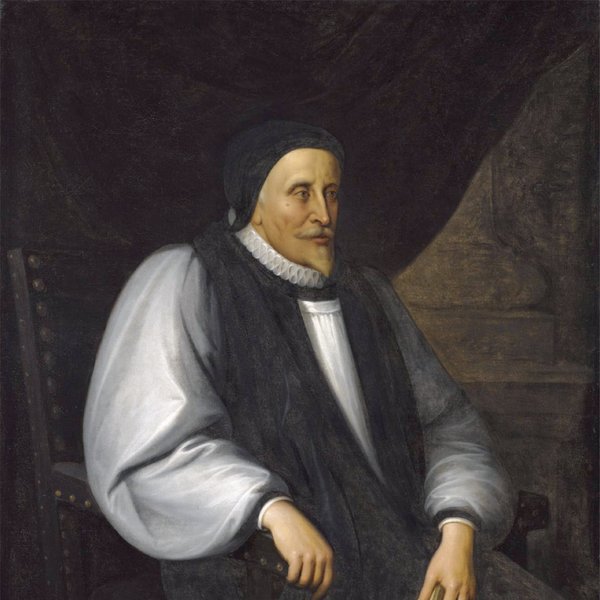
Lancelot Andrewes
Dean of Westminster & Director of KJV First Westminster Company
1555 – 1626 • English
"He is not a preacher that cannot speak to all sorts of people; he is not a scholar that cannot read all sorts of books."
Lancelot Andrewes was Bishop of Winchester and one of the supreme minds of the Jacobean Church. When King James I sanctioned a new translation of the Bible at Hampton Court in 1604, Andrewes was appointed to direct the First Westminster Company, responsible for the Old Testament from Genesis to Second Kings. Renowned for his mastery of Hebrew, Aramaic, Greek, Latin, and Syriac, Andrewes and his committee met regularly in the Jerusalem Chamber at Westminster Abbey, reading every translated verse aloud to ensure that its cadences were magnificent when spoken in church.