Wycliffe Bible
The first complete translation of the Bible into English, hand-copied by John Wycliffe and his followers (the Lollards).
What Texts and Translations Did This Version Use?
The foundational manuscripts, earlier translations, and polyglots consulted during compilation.
Who In The Future Used This Translation?
Modern revisions, authorized successors, and descendants shaped by this text.
Translators & Committees
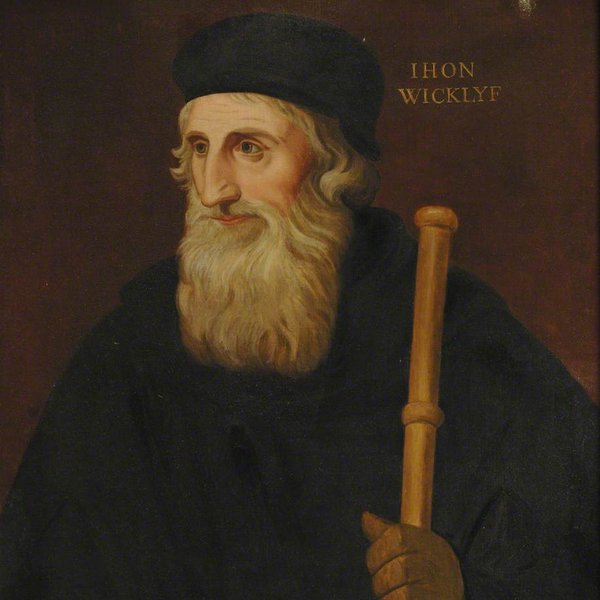
John Wycliffe
Morning Star of the Reformation
1328 – 1384 • English
"This Bible is for the government of the people, by the people, and for the people."
John Wycliffe was an Oxford philosopher, theologian, and priest whose reformist writings earned him the moniker "The Morning Star of the Reformation." Wycliffe argued that papal authority was subordinate to scripture and that all Christians had a divine right to read God's word in their vernacular tongue. Together with his circle of Oxford scholars, Wycliffe completed the first translation of the entire Bible into English in 1382. His followers, nicknamed Lollards, traveled the English countryside with handwritten copies, sowing the seeds of the English Reformation more than a century before Martin Luther.
Read full biographyHistorical Context & Textual Significance
Proved the viability of the English language for expressing holy scripture and ignited the vernacular Bible movement in the English-speaking world.
Where Can You View Original Surviving Copies Today?
Known physical copies preserved in world archives and library vaults.